
Yes, CBD is legal in the UK. CBD itself is not a controlled substance under British law, and CBD oils, capsules, and topicals are sold openly through high-street retailers and pharmacies. The detail most searches on this topic miss is the actual THC standard that determines whether a specific product is legal. Rather than the 0.2 percent figure often quoted online, UK law requires finished CBD products to contain less than 1 milligram of any controlled cannabinoid, including THC, per individual container. Exceeding that limit reclassifies the product as a Class B controlled drug.
That distinction matters more than most buyers realise. You can find yourself with a full-spectrum CBD oil, a format extremely common in the United States, that is not legally sold to UK consumers, simply because its total THC content per bottle exceeds this 1 milligram threshold even though its percentage concentration looks low. This guide separates the commonly repeated 0.2 percent figure from the standard that actually governs what you can legally buy and possess in the UK.
Key Takeaways
- CBD itself is not a controlled substance in the UK; THC and similar cannabinoids are controlled under the Misuse of Drugs Act 1971.
- Finished CBD products must contain less than 1 milligram of any controlled cannabinoid, including THC, THCV, and CBN, per individual container, not the commonly cited 0.2 percent figure, which applies only to licensed industrial hemp cultivation.
- Exceeding the 1 milligram per container limit reclassifies a product as a Class B controlled drug, carrying penalties of up to 14 years in prison for supply.
- Most US-style full-spectrum CBD products exceed this UK limit and are not legally sold to UK consumers.
- Ingestible CBD, including oils, capsules, drinks, and edibles, is regulated as a Novel Food, and as of 2026 no CBD product has received full authorisation from the Food Standards Agency.
- CBD flower is illegal in the UK under the Misuse of Drugs Act regardless of its THC content, because the flowering part of the cannabis plant is itself classified as a controlled material.
Is CBD Legal in the UK? The Direct Answer
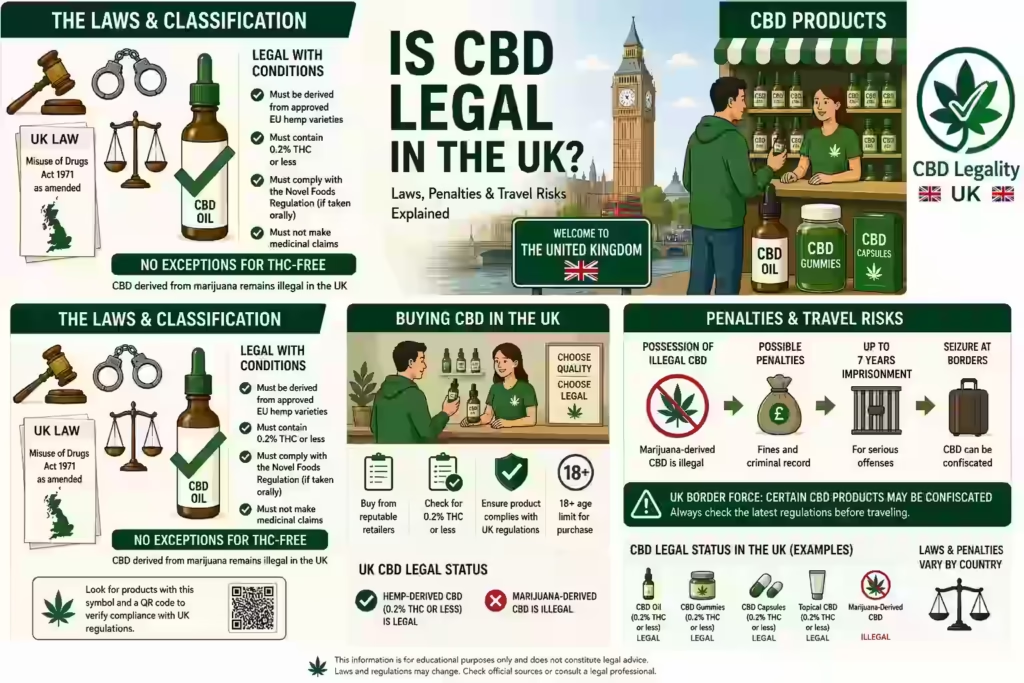
CBD is legal to buy, sell, and possess in the UK, provided the finished product meets specific regulatory conditions. CBD must be extracted from an approved, EU-listed industrial hemp variety grown under Home Office licence, the finished product must contain less than 1 milligram of any controlled cannabinoid per container, and ingestible products must be sold under a valid Novel Food application. No medicinal claims can be made about a CBD product unless it holds a licence from the Medicines and Healthcare products Regulatory Agency.
The Real THC Standard: 1mg Per Container, Not 0.2 Percent
Why the 0.2 Percent Figure Gets Misquoted
The 0.2 percent THC figure circulating widely online applies specifically to the cultivation of industrial hemp under Home Office licence, governing what farmers may legally grow. It does not automatically apply to the finished retail product a consumer eventually buys. The actual enforcement standard for finished CBD products sold in the UK is a fixed milligram limit, not a percentage, which is a meaningfully different way of measuring compliance and one that catches many buyers and even some retailers off guard.
What Happens If a Product Exceeds the Limit
A finished CBD product containing more than 1 milligram of any controlled cannabinoid per container is treated as a Class B controlled drug under the Misuse of Drugs Act 1971. Supplying such a product can carry penalties of up to 14 years in prison, entirely separate from and in addition to any Novel Food compliance issues the product might also have. This is why full-spectrum CBD products, which retain a broader range of naturally occurring cannabinoids including trace THC, frequently fail to meet UK requirements even when they would be considered low-THC and fully compliant under the percentage-based standards used in the United States.
The Novel Food Problem: Why No CBD Product Is Fully Authorised Yet
The FSA’s Public List System
Since March 31, 2021, all ingestible CBD products sold in Great Britain have required Novel Food authorisation from the Food Standards Agency, on the basis that CBD has no established history of consumption before 1997. Rather than removing every unauthorised product from sale immediately, the FSA created a public list of products linked to credible, in-progress Novel Food applications. Products marked as “Validated” or “Awaiting evidence” on this list are permitted to remain on sale while their applications continue through the review process, while products absent from the list are expected to be removed from the market by local authorities. As of 2026, no CBD product has received full Novel Food authorisation, though several companies have received positive safety assessments and are reported to be in the final stages of the process. The FSA has also removed more than 100 products from the public list after their applications failed to progress.
The Acceptable Daily Intake: 10mg, Not 70mg
In October 2023, the FSA reduced its recommended acceptable daily intake for CBD from 70 milligrams per day to 10 milligrams per day for a healthy adult weighing 70 kilograms, citing new evidence linking higher long-term daily use to potential liver and thyroid effects. This figure is advisory guidance rather than a legally enforced limit, and businesses are encouraged, but not required, to reformulate products in line with it.
Why CBD Flower Is Illegal in the UK
Raw CBD flower remains illegal in the UK under the Misuse of Drugs Act, regardless of how low its THC content is. This is because UK law classifies the flowering parts of the cannabis plant as a controlled material in their own right, separate from any THC-based percentage test. This creates an unusual split in the UK market, where CBD oils, capsules, gummies, and topicals can be legally compliant, while the raw flower those same cannabinoids are extracted from remains a controlled substance throughout.
Are Delta-8, HHC, and Other Novel Cannabinoids Legal?
Semi-synthetic and rare cannabinoids, including HHC, HHC-O, HHC-P, THCp, THCv, Delta-8 THC, and Delta-10 THC, occupy a genuine legal grey area in the UK. These compounds are not clearly addressed by existing hemp or CBD-specific regulation, and their legal status has not been definitively settled, which makes them considerably riskier to buy or sell than standard, compliant CBD products.
CBD Product Types in the UK: Quick Reference
| Product Type | Legal Status |
|---|---|
| CBD oils, capsules (under 1mg controlled cannabinoid per container) | Legal, subject to Novel Food listing |
| CBD topicals and cosmetics | Legal, not subject to Novel Food rules |
| CBD vape products | Legal in most cases, separate vaping regulations apply |
| CBD flower | Illegal, regardless of THC content |
| Full-spectrum CBD exceeding 1mg per container | Illegal, treated as a Class B controlled drug |
| Delta-8, HHC, THCp and similar novel cannabinoids | Legal grey area |
Can CBD Be Marketed as Medicine in the UK?
No, not without a specific licence. CBD products cannot legally be marketed with claims that they diagnose, treat, cure, or prevent any medical condition unless the product holds formal authorisation from the Medicines and Healthcare products Regulatory Agency. Retailers must limit marketing to general wellness language rather than therapeutic claims.
Where to Buy Legal CBD in the UK
Compliant CBD oils, capsules, and topicals are widely available through high-street pharmacies, health food shops, and online retailers operating within UK regulations. Because compliance issues are genuinely common in this market, buyers benefit from checking a product’s status directly rather than assuming any CBD product on sale is automatically compliant.
What to Check Before Buying
Confirm the product appears on the FSA’s public Novel Food list with a “Validated” or “Awaiting evidence” status if it is an ingestible product, and look for a current Certificate of Analysis confirming controlled cannabinoid content falls below the 1 milligram per container threshold. Products marketed as full-spectrum deserve particular scrutiny, since this format is the one most likely to exceed UK limits.
Traveling To and From the UK With CBD
Importing cannabis into the UK from any country, including places where it is fully legal such as Canada, Germany, or various US states, is a criminal offence regardless of the quantity involved or whether it was legally prescribed abroad. UK Border Force routinely seizes cannabis-related products at airports and postal hubs. Standard, compliant CBD products purchased within the UK generally travel without issue domestically, but travellers should not assume CBD products purchased legally in another country will be treated the same way at UK customs.
Is CBD Legal in Other Countries?
The UK’s Novel Food authorisation gap mirrors a challenge playing out across several other European markets. For a comparison with a country facing the same unresolved Novel Food question alongside its own stricter THC interpretation, see our guide to CBD legality in Ireland. For a look at a country that took a considerably more dramatic regulatory turn on hemp flower specifically, our guide to CBD legality in Italy is worth reviewing, and for a stricter, prescription-based model outside the EU framework entirely, our guide to CBD legality in Norway offers a useful contrast.
Frequently Asked Questions
Is CBD legal in the UK in 2026? Yes. CBD itself is not a controlled substance, and CBD oils, capsules, and topicals are legal, provided they meet THC limits and, for ingestible products, Novel Food listing requirements.
What is the actual THC limit for CBD products in the UK? Finished products must contain less than 1 milligram of any controlled cannabinoid per container, not the commonly cited 0.2 percent figure, which applies only to licensed hemp cultivation.
Is full-spectrum CBD legal in the UK? Often not. Full-spectrum CBD retains a broader range of cannabinoids, including trace THC, and frequently exceeds the UK’s 1 milligram per container limit, making many full-spectrum products, particularly those imported from the US, non-compliant.
Is CBD flower legal in the UK? No. Raw CBD flower is illegal under the Misuse of Drugs Act regardless of THC content, since UK law classifies the flowering part of the cannabis plant as a controlled material.
Can CBD products make health claims in the UK? No, not without a licence. CBD products cannot legally claim to treat or cure any medical condition unless authorised by the Medicines and Healthcare products Regulatory Agency.
Is Delta-8 THC legal in the UK? It sits in a genuine legal grey area, along with other semi-synthetic and rare cannabinoids such as HHC and THCp, since UK regulation has not clearly addressed these compounds.
Final Conclusion
CBD is legal in the UK, but the standard that actually governs compliance, a 1 milligram per container limit on controlled cannabinoids, is considerably more precise than the 0.2 percent figure most buyers have heard. Layer on an unresolved Novel Food authorisation process for anything ingestible and an outright ban on raw CBD flower, and the UK’s CBD market looks more detailed than its simple legal status suggests. Checking a product’s Novel Food listing and its actual milligram THC content, rather than relying on percentage claims alone, remains the safest way to buy CBD legally in the UK.
This article is for informational purposes only and does not constitute legal advice. Readers should confirm current requirements with the Food Standards Agency or a licensed solicitor before making purchasing or business decisions.