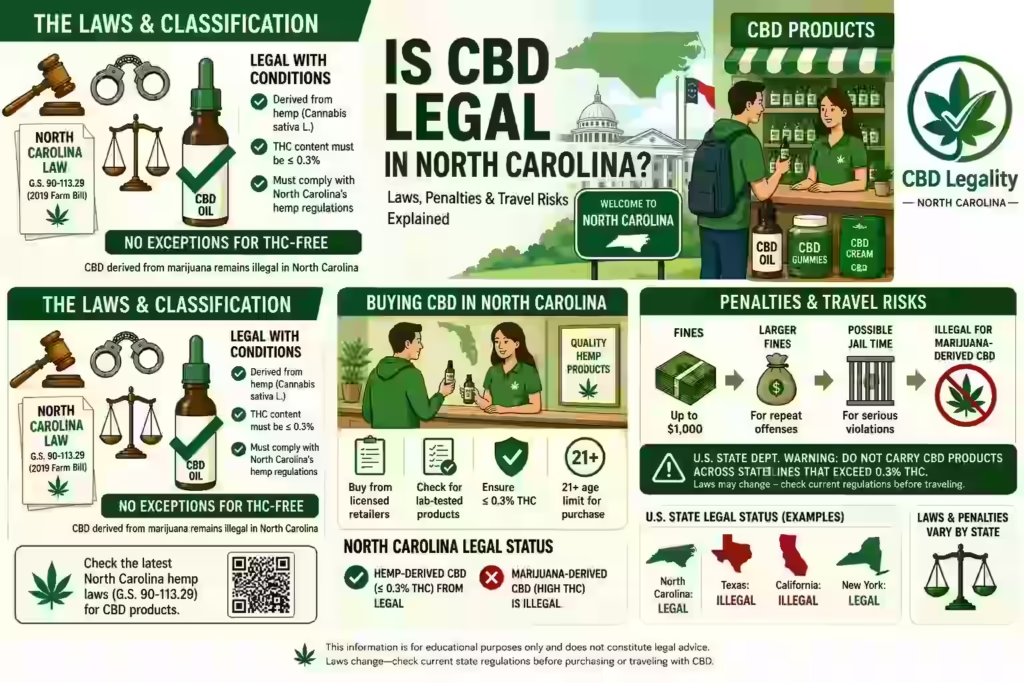

Yes, CBD is legal in North Carolina. Hemp-derived CBD containing 0.3 percent Delta-9 THC or less has been legal statewide since the North Carolina Farm Act of 2022, and today the state maintains one of the more permissive hemp markets in the country, with no minimum purchase age currently written into state law. That permissiveness extends well beyond ordinary CBD oil, covering Delta-8 THC, Delta-9 gummies, and THCA flower sold openly at vape shops and convenience stores statewide.
This picture is changing quickly, and it is worth understanding exactly how. You can find yourself buying a hemp product in North Carolina today that could become effectively unsellable within months, since a pending state age law and an incoming federal THC standard are both set to take effect before the end of 2026. This guide covers what remains legal right now, what recently changed, and what is scheduled to change next.
Key Takeaways
- Hemp-derived CBD with 0.3 percent Delta-9 THC or less is legal in North Carolina under the Farm Act of 2022, Senate Bill 455.
- North Carolina currently has no statewide minimum age to buy CBD, though a 21-plus requirement has already passed the state Senate and awaits action in the House.
- Delta-8 THC, Delta-9 gummies, and THCA flower remain legal and widely available under North Carolina’s current hemp definition.
- Marijuana, including marijuana-derived CBD, remains illegal for the general public, with a narrow exception on Eastern Band of Cherokee Indian tribal land.
- A federal rule taking effect November 12, 2026, will cap total THC at 0.4 milligrams per container, a standard considerably stricter than North Carolina’s current 0.3 percent by dry weight.
- North Carolina’s 2014 Epilepsy Alternative Treatment Act provides only a narrow legal defense for qualifying patients, not a functioning medical cannabis program.
Is CBD Legal in North Carolina? The Direct Answer
North Carolina permits the purchase, possession, and sale of hemp-derived CBD containing 0.3 percent Delta-9 THC or less, matching the federal standard set by the 2018 Farm Bill. This legal foundation covers oils, tinctures, capsules, gummies, and topicals, and currently no prescription or age verification is required by state law to buy them, though individual retailers may still set their own purchase policies. Marijuana-derived CBD remains illegal, since North Carolina treats cannabis exceeding the 0.3 percent threshold as marijuana, a controlled substance, regardless of how a product is marketed.
How North Carolina’s Hemp Law Came Together
Governor Roy Cooper signed Senate Bill 455, the North Carolina Farm Act of 2022, on June 30, 2022, following strong bipartisan support in the legislature. The law permanently excluded hemp and hemp-derived products from North Carolina’s Controlled Substances Act, replacing the state’s earlier hemp pilot program that had operated on a temporary, annually reauthorized basis since 2015. This gave North Carolina’s hemp industry a stable legal foundation, distinct from the year-to-year uncertainty that had defined the pilot program era.
Why North Carolina’s Market Remains Comparatively Permissive
North Carolina has added relatively few restrictions on top of its basic 0.3 percent THC threshold compared to many other states. There is currently no statewide retail licensing requirement specific to CBD sellers, though House Bill 607, addressing hemp retail licensing, has been advancing through the legislature. There is also no statewide minimum purchase age, a gap Governor Josh Stein has publicly urged the General Assembly to close.
Delta-8, Delta-9 Gummies, and THCA Flower
As of mid-2026, Delta-8 THC, Delta-9 gummies, and THCA flower all remain legal in North Carolina, provided the products meet the state’s hemp definition. This has produced a large, largely unregulated intoxicating hemp market, sold openly through vape shops, gas stations, and smoke shops statewide, a considerably more permissive environment than states that have banned these cannabinoid categories outright.
Two Changes Arriving Before the End of 2026
A 21-Plus Age Requirement Awaiting Final Passage
House Bill 328 returned through a conference committee after appearing stalled earlier in the session and passed the North Carolina Senate by a vote of 37 to 6 on July 2, 2026. If the House concurs, the measure would establish a statewide 21-plus minimum purchase age for hemp-derived cannabinoid products, with an effective date of July 15, 2026.
A Federal Standard That Measures THC Differently
Separate from anything North Carolina’s own legislature does, a provision included in the federal Continuing Resolution passed in November 2025 introduces a stricter national hemp definition, capping total THC at 0.4 milligrams per container rather than the current 0.3 percent dry-weight test. This change, formalized as Public Law 119-37, takes effect exactly one year after signing, on November 12, 2026. Because this measures THC as a fixed milligram amount per container rather than a percentage, many currently legal North Carolina hemp products, particularly Delta-8 and Delta-9 edibles, are likely to exceed the new federal threshold once it takes effect.
North Carolina Hemp Law: Current Rules vs What Is Coming
| Factor | Current Law (Mid-2026) | After Pending Changes |
|---|---|---|
| Legal THC standard | 0.3% Delta-9 THC, dry weight | 0.4mg total THC per container (federal, Nov 12) |
| Minimum purchase age | None statewide | 21+, if HB 328 takes effect July 15 |
| Delta-8, Delta-9 gummies, THCA flower | Legal and widely sold | Likely non-compliant under new federal cap |
| Retail licensing | Not currently required | Under active legislative consideration |
State law itself has not yet changed as of this writing. What buyers are watching is the gap between North Carolina’s still-permissive current statute and the federal standard approaching from a different direction entirely.
Marijuana Remains Illegal for the General Public
Recreational and medical marijuana remain illegal in North Carolina for the general public in 2026. Possession of small amounts has in practice been treated as a lower-level offense, but it remains a criminal matter rather than a decriminalized one, and larger quantities can lead to more serious charges.
The Eastern Band of Cherokee Indians Exception
One narrow exception exists under tribal sovereignty. The Eastern Band of Cherokee Indians operates its own cannabis framework on tribal land, entirely separate from North Carolina state law, allowing limited legal cannabis access that does not extend beyond that jurisdiction.
The 2014 Epilepsy Law Is Not a Medical Program
North Carolina’s Epilepsy Alternative Treatment Act, passed in 2014 as House Bill 1220, allows patients with intractable epilepsy to possess and use hemp extract containing less than 0.9 percent THC and at least 5 percent CBD. This functions as an affirmative legal defense rather than true legalization, meaning a qualifying patient could still face charges and would need to raise the defense in court. No state agency administers this law, there is no patient registry, and no licensed dispensary system exists, which sets it apart considerably from the medical cannabis programs operated by many other states.
Where to Buy CBD in North Carolina
Hemp-derived CBD products are widely available throughout North Carolina at specialty CBD retailers, vape shops, gas stations, pharmacies, and online sellers. Given the current absence of statewide licensing or mandatory testing requirements, product quality and compliance can vary meaningfully between sellers.
What to Check Before Buying
Look for a current Certificate of Analysis from an independent, accredited laboratory confirming Delta-9 THC content at or below 0.3 percent. Given the federal total-THC cap arriving in November 2026, buyers purchasing Delta-8 or Delta-9 edible products should also pay attention to total milligram THC content per container, not just the percentage figure, since milligrams are the measurement the new federal standard will actually apply.
Is CBD Legal in Neighboring States?
North Carolina’s currently permissive approach stands out against several nearby states that have already tightened their own hemp rules. For a look at a neighboring state facing a similar unresolved regulatory gap around intoxicating hemp products, see our guide to CBD legality in South Carolina. For a comparison with a state that has already completed a full licensing overhaul of its hemp market, our guide to CBD legality in Tennessee is worth reviewing.
Frequently Asked Questions
Is CBD legal in North Carolina in 2026? Yes. Hemp-derived CBD with 0.3 percent Delta-9 THC or less is legal to buy, possess, and use under the Farm Act of 2022, with no prescription required.
Is there a minimum age to buy CBD in North Carolina? Not currently under state law, though House Bill 328 would establish a 21-plus requirement if it takes effect on July 15, 2026.
Is Delta-8 THC legal in North Carolina? Yes, as of mid-2026, along with Delta-9 gummies and THCA flower, though a federal rule change taking effect November 12, 2026, is expected to make many of these products non-compliant.
What is changing with hemp law in North Carolina in November 2026? A federal provision caps total THC at 0.4 milligrams per container, replacing the current 0.3 percent dry-weight standard for many product categories.
Is marijuana legal in North Carolina? No. Recreational and medical marijuana remain illegal for the general public, with a narrow exception under tribal sovereignty on Eastern Band of Cherokee Indian land.
Does North Carolina have a medical marijuana program? No functioning program exists. The 2014 Epilepsy Alternative Treatment Act provides only a narrow legal defense for qualifying epilepsy patients, without a registry or licensed dispensary system.
Final Conclusion
CBD is clearly legal in North Carolina today, and the state currently runs one of the more permissive hemp markets in the country, extending to Delta-8, Delta-9 edibles, and THCA flower with no statewide age requirement. That picture is set to shift meaningfully before the end of 2026, as a pending state age restriction and a considerably stricter federal total-THC standard both approach within months of each other. Anyone buying hemp products in North Carolina should watch both developments closely, since a product legal today may not remain compliant once the federal cap takes effect in November.
This article is for informational purposes only and does not constitute legal advice. Readers should confirm current requirements with the North Carolina Department of Agriculture and Consumer Services or a licensed attorney before making purchasing or business decisions.


