
Yes, CBD is legal in Alabama. Hemp-derived CBD containing 0.3 percent THC or less can be bought and used by any adult, without a medical card or prescription, through retailers licensed by the Alabama Alcoholic Beverage Control Board. The complication sits with product format rather than THC content. Alabama treats smokable hemp, including CBD vapes and flower, as a felony offense, a rule with no exception for low-THC or non-intoxicating products.
That distinction is the single most important thing to understand before buying CBD in Alabama. You can find yourself holding a CBD vape cartridge that contains no meaningful THC at all, yet still be in possession of a product that Alabama classifies as a Class C felony simply because of its smokable form. This guide walks through what is legal, what carries real legal risk, and how Alabama’s rules changed heading into 2026.
Key Takeaways
- Hemp-derived CBD with 0.3 percent THC or less is legal in Alabama for any adult, without a prescription.
- Since July 1, 2025, all smokable and inhalable hemp products, including CBD vapes and flower, have been a Class C felony in Alabama, regardless of THC content.
- Since January 1, 2026, only retailers licensed by the Alabama Alcoholic Beverage Control Board may legally sell consumable hemp products.
- Ingestible hemp products, such as gummies and beverages, are capped at 10 milligrams of total THC per serving and 40 milligrams per package.
- Alabama has a medical-only cannabis program under the Compassion Act, separate from the general hemp CBD market and requiring patient registration.
- Alabama provides no safe-harbor exception for hemp products that were purchased legally in another state.
Is CBD Legal in Alabama? The Direct Answer
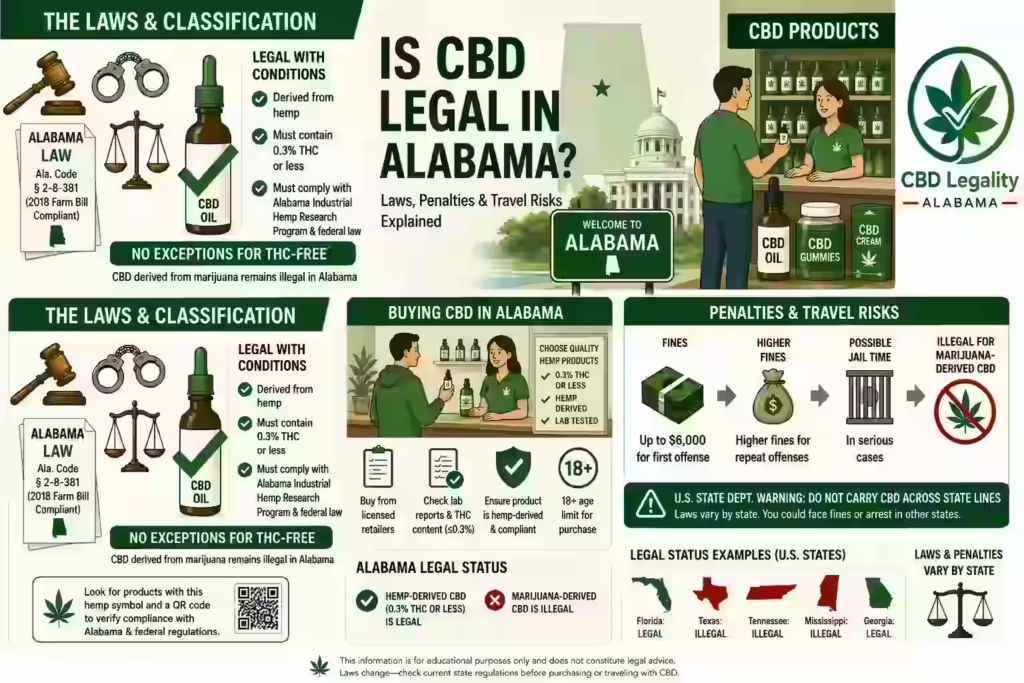
Alabama permits the purchase, possession, and use of hemp-derived CBD containing 0.3 percent Delta-9 THC or less, aligned with the federal standard set by the 2018 Farm Bill. This covers oils, tinctures, capsules, and topicals, available without a prescription through licensed retailers. No medical registration is required to buy these standard products, which places Alabama’s general CBD market on similar footing to most other states, right up until a product’s format shifts into smokable territory.
The Legal Foundation: Alabama’s Hemp Statute
Alabama’s hemp program is administered by the Alabama Department of Agriculture and Industries, which oversees cultivation and processing permits under the state’s hemp statute. For years, this framework operated with comparatively modest additional restrictions beyond the basic 0.3 percent THC threshold, which allowed Alabama’s hemp retail market, including intoxicating cannabinoid products, to expand with relatively light oversight. That changed substantially with House Bill 445, signed by Governor Kay Ivey on May 14, 2025.
House Bill 445: Alabama’s 2025 and 2026 Hemp Overhaul
House Bill 445 rebuilt Alabama’s hemp regulatory structure in two stages. The first stage, a felony ban on smokable hemp products, took effect July 1, 2025. The second stage, a full licensing and testing framework administered by the Alabama Alcoholic Beverage Control Board, took effect January 1, 2026, following a rulemaking period.
The Smokable Hemp Ban
As of July 1, 2025, manufacturing, selling, or possessing smokable or inhalable hemp products, including flower, pre-rolls, vapes, and cartridges, is a Class C felony in Alabama, carrying one to ten years in prison. This applies regardless of THC content and covers CBD-labeled smokable products just as it covers higher-THC hemp derivatives. Alabama drew no distinction between intoxicating and non-intoxicating cannabinoids for this specific ban.
THC Caps for Edibles and Beverages
For products that remain legal, House Bill 445 established a total-THC standard, calculated after decarboxylation, combining Delta-9 THC with a portion of any THCA present. Ingestible hemp products are capped at 10 milligrams of total THC per serving and 40 milligrams per package, and hemp beverages are limited to four 12-ounce servings per container.
ABC Board Licensing
Since January 1, 2026, only retailers licensed by the Alabama Alcoholic Beverage Control Board may sell consumable hemp products in the state. Manufacturers and wholesalers pay 5,000 dollars in annual licensing fees, retailers pay 1,000 dollars, and a 10 percent excise tax applies to sales. Retailers operating without an ABC license after this date are selling outside the legal market, regardless of what their products actually contain.
Hemp Penalties vs Marijuana Penalties in Alabama
| Offense | Classification | Potential Penalty |
|---|---|---|
| Possessing smokable hemp or CBD vape | Class C Felony | 1 to 10 years in prison |
| Possessing a small amount of marijuana, first offense | Class A Misdemeanor | Up to 1 year in jail |
| Selling hemp products without ABC license | Civil and criminal penalties | Fines up to $15,000, additional prison exposure |
This table reflects one of the more unusual features of Alabama’s current law. A hemp vape purchased legally in a neighboring state can carry a harsher potential penalty in Alabama than marijuana itself, simply because of how House Bill 445 categorized smokable products.
What Is Legal and What Is Not in Alabama: Quick Reference
| Product or Category | Legal Status |
|---|---|
| CBD oils, tinctures, capsules, topicals (0.3% THC or less) | Legal, sold through ABC-licensed retailers |
| CBD edibles and beverages | Legal, capped at 10mg THC per serving, 40mg per package |
| Smokable hemp, including CBD vapes and flower | Illegal, Class C felony regardless of THC content |
| Marijuana-derived CBD | Legal only for registered medical patients |
| Recreational marijuana | Illegal |
Age Requirements for Buying CBD in Alabama
Alabama generally treats hemp-derived products as an adult category, and ABC-licensed retailers apply age verification at the point of sale consistent with the Board’s broader regulatory framework for controlled consumer products.
Where to Legally Buy CBD in Alabama
Legal, non-smokable CBD products are available through ABC Board licensed specialty retailers, participating pharmacies, and certain food retailers. No prescription or medical registration is required. Buyers should look for a current Certificate of Analysis confirming a product’s total THC content falls within Alabama’s legal limits.
Buying CBD Online in Alabama
Non-smokable hemp-derived CBD oils and topicals can generally be shipped into Alabama without issue, provided the retailer complies with Alabama Department of Agriculture and Industries labeling rules. Online sales of the broader category of consumable hemp products now regulated under House Bill 445 face additional restrictions, so confirming a retailer’s current compliance status before ordering is worthwhile, particularly for edibles and beverages.
Alabama’s Medical Cannabis Program
Separate from the general hemp CBD market, Alabama operates a medical-only cannabis program under the Darren Wesley “Ato” Hall Compassion Act, created by Senate Bill 46 in 2021 and administered by the Alabama Medical Cannabis Commission. After years of licensing litigation, the state’s first dispensary began sales in Montgomery in 2026. Registered patients aged 19 and older with a qualifying condition can access non-smokable medical cannabis products through licensed dispensaries, requiring a medical card and diagnosis, entirely separate from the retail hemp market described above.
Traveling to Alabama With CBD
Alabama provides no safe-harbor exception for hemp products purchased legally elsewhere. A CBD flower, pre-roll, or vape cartridge legal in your home state becomes illegal the moment it crosses into Alabama in smokable form, carrying the same Class C felony exposure described above. Non-smokable CBD oils and topicals carried across state lines generally present far less legal risk.
Is CBD Legal in Neighboring States?
Alabama’s approach is notably stricter than several of its neighbors on smokable hemp specifically. For a comparison with a state that has taken a similarly strict turn on hemp retail through alcohol-style licensing, see our guide to CBD legality in Tennessee. For a look at a state with fewer format-based restrictions, our guide to CBD oil legality in Georgia covers a neighboring market with its own distinct rules on consumable hemp products.
If you plan to travel with hemp products across additional borders, our guide on understanding CBD import laws for travelers and businesses explains documentation and compliance risk in more depth.
Frequently Asked Questions
Is CBD legal in Alabama in 2026? Yes. Hemp-derived CBD with 0.3 percent THC or less is legal for adults to buy and use without a prescription, purchased through an ABC Board licensed retailer.
Is CBD vape legal in Alabama? No. Since July 1, 2025, all smokable and inhalable hemp products, including CBD vapes, have been a Class C felony under House Bill 445, regardless of THC content.
Do I need a medical card to buy CBD in Alabama? No. Standard hemp-derived CBD products are available to any adult without a medical card. A card is required only for Alabama’s separate medical cannabis program.
What is the THC limit for legal CBD edibles in Alabama? Ingestible hemp products are capped at 10 milligrams of total THC per serving and 40 milligrams per package under House Bill 445.
Can I bring CBD products from another state into Alabama? Non-smokable CBD oils and topicals generally carry lower legal risk, but smokable hemp products legal elsewhere become illegal the instant they cross into Alabama, since the state provides no safe-harbor exception.
Is recreational marijuana legal in Alabama? No. Alabama has not legalized recreational marijuana. The state operates a medical-only cannabis program, and recreational possession remains a criminal offense.
Final Conclusion
CBD is legal in Alabama, but the safest way to think about the state’s rules is by product format rather than by THC percentage alone. Oils, tinctures, capsules, topicals, and properly capped edibles are legal through ABC-licensed retailers, while anything smokable, including CBD vapes and flower, carries felony exposure regardless of THC content. Anyone buying, carrying, or shipping CBD in Alabama should confirm the product is non-smokable, check for a current Certificate of Analysis, and verify the seller holds an active ABC Board license before assuming a purchase legal at home will be treated the same way in Alabama.
This article is for informational purposes only and does not constitute legal advice. Readers should confirm current requirements with the Alabama Alcoholic Beverage Control Board or a licensed attorney before making purchasing or business decisions.