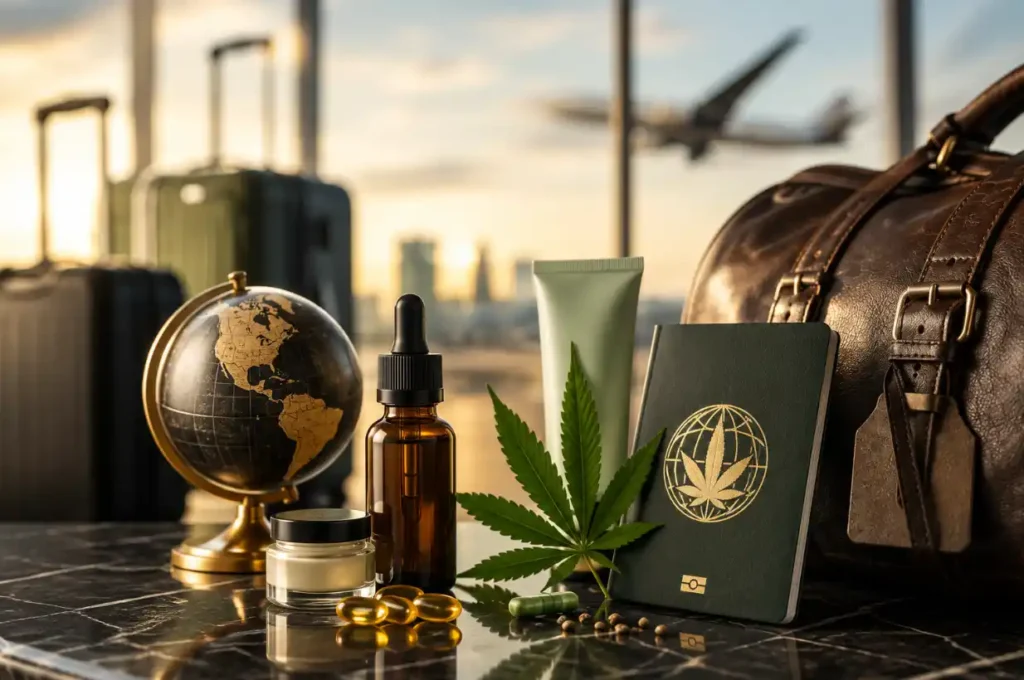

International travel and global commerce have become more accessible than ever, making it easier for people and businesses to transport products across borders. Among the many goods moving internationally, cannabidiol (CBD) products have gained significant attention due to their growing popularity in wellness, cosmetics, and consumer goods. However, despite widespread acceptance in some countries, CBD remains heavily regulated or even prohibited in others.
For travelers carrying CBD products in their luggage and businesses importing CBD goods into foreign markets, understanding international regulations is essential. A product that is perfectly legal in one country may be restricted or prohibited in another, potentially resulting in customs delays, product seizures, financial penalties, or legal consequences.
This guide explores the key factors that shape CBD import laws, outlines common compliance challenges, and provides practical guidance for both travelers and businesses. It also explains why compliant packaging, including Custom CBD Boxes, plays an important role in supporting product labeling, documentation, and international shipping requirements.
Why CBD Import Laws Differ Around the World
One of the biggest misconceptions about CBD is that its legality is universal. In reality, each country establishes its own laws governing hemp, cannabis, controlled substances, and consumer products.
Several factors influence whether CBD products may be imported, including:
- The source of the CBD (hemp-derived or cannabis-derived)
- The amount of tetrahydrocannabinol (THC) contained in the product
- Product category, such as oils, capsules, cosmetics, foods, or supplements
- Intended use (personal or commercial)
- National customs and pharmaceutical regulations
- Licensing or import permit requirements
Some countries allow only hemp-derived CBD containing trace amounts of THC, while others prohibit all cannabis-derived substances regardless of THC concentration. Because of these differences, import requirements vary significantly across jurisdictions.
CBD, Hemp, and THC: Understanding the Legal Distinction
Understanding basic terminology is the first step toward compliance.
Cannabidiol (CBD) is a naturally occurring compound found in cannabis plants. Unlike THC, CBD is generally recognized for its non-intoxicating properties.
Hemp refers to varieties of cannabis cultivated with very low THC concentrations. Many jurisdictions distinguish hemp from marijuana using a legally defined THC threshold, although the permitted percentage differs from one country to another.
THC (Tetrahydrocannabinol) is the psychoactive component responsible for the intoxicating effects associated with cannabis. Many customs authorities focus primarily on THC content when determining whether a CBD product may legally enter the country.
Even products advertised as “THC-free” should be supported by independent laboratory testing, as trace THC levels may still be detectable.
What Travelers Should Know Before Carrying CBD Internationally
Travelers often assume that purchasing CBD legally at home automatically allows them to carry it abroad. Unfortunately, international travel involves the laws of multiple jurisdictions, including departure, transit, and destination countries.
Before packing any CBD product, travelers should verify:
Check Destination Laws
Research whether CBD is legal in the destination country. Some nations permit only prescription CBD products, while others prohibit all CBD regardless of THC concentration.
Understand Airline Policies
Even if local laws permit CBD, airlines may impose additional restrictions regarding cannabis-related products. Travelers should review airline baggage policies before departure.
Verify Transit Regulations
Connecting flights can create unexpected legal issues. During layovers, passengers may become subject to the laws of transit countries where CBD regulations differ significantly.
Carry Product Documentation
When permitted, travelers should keep:
- Original sealed packaging
- Purchase receipts
- Certificate of Analysis (COA)
- Product ingredient list
- Any required medical documentation
These documents may help customs officials verify the product’s contents.
Import Requirements for Businesses
Businesses importing CBD products face considerably more regulatory obligations than individual travelers.
Commercial importers are generally expected to comply with requirements relating to:
- Product registration
- Customs declarations
- Ingredient disclosure
- THC compliance testing
- Product labeling regulations
- Manufacturing standards
- Import licensing where applicable
Importing products without satisfying local regulatory requirements may result in shipment detention, customs refusal, fines, or destruction of goods.
Many countries also regulate CBD differently depending on whether products are classified as cosmetics, foods, dietary supplements, pharmaceuticals, or consumer goods.
Why a Certificate of Analysis (COA) Matters
One of the most important documents for international CBD trade is the Certificate of Analysis (COA).
A COA is issued by an independent laboratory and typically confirms:
- CBD concentration
- THC concentration
- Cannabinoid profile
- Heavy metal testing
- Pesticide screening
Many distributors, customs agencies, and commercial buyers request a recent COA before approving imports. While a COA does not guarantee legal entry into every country, it provides evidence regarding the product’s composition and quality.
Country-Specific CBD Import Considerations
Although CBD laws continue to evolve, one rule applies almost everywhere: never assume the regulations in one country apply to another. Before traveling or shipping products internationally, verify the latest requirements through the destination country’s customs authority or health regulator.
Here is a general overview of how different regions approach CBD imports:
United States
Hemp-derived CBD products may be legal under federal law in certain circumstances, but products are still subject to regulations enforced by agencies such as the U.S. Food and Drug Administration (FDA). Individual states may also have additional restrictions, making compliance more complex for businesses.
United Kingdom
CBD products are generally permitted if they comply with applicable regulations, including strict THC limits and product safety requirements. Businesses importing CBD products should ensure they meet labeling and Novel Food requirements where applicable.
European Union
There is no single CBD law that applies across every EU member state. While many countries permit certain hemp-derived CBD products, individual nations may have different rules regarding THC limits, cosmetics, foods, and supplements.
Canada
Canada has one of the most comprehensive cannabis regulatory systems. Businesses importing CBD products typically require appropriate licensing and regulatory approval before products can legally enter the market.
Australia
Australia regulates CBD differently depending on product classification and intended use. Certain CBD products may require prescriptions or regulatory approval before they can be imported or sold.
Japan
Japan allows only certain CBD products that contain no detectable THC. Even trace THC may result in customs refusal or legal consequences, making laboratory verification particularly important.
United Arab Emirates (UAE)
The UAE has historically maintained strict controls on cannabis-related substances. Travelers should carefully review current regulations before carrying any CBD product into the country, regardless of whether it was legally purchased elsewhere.
Singapore
Singapore enforces some of the world’s strictest drug laws. Importing cannabis-derived products without proper authorization may carry severe legal penalties.
Also read more about CBD Laws
Common Reasons CBD Shipments Are Delayed or Seized
Many customs issues arise because businesses assume their products automatically satisfy another country’s requirements.
Common reasons for shipment delays include:
- Missing Certificates of Analysis
- Incorrect customs declarations
- THC levels exceeding local legal limits
- Improper or misleading product labels
- Missing import permits
- Unsupported health or medical claims
- Incomplete shipping documentation
- Failure to comply with local packaging regulations
Even minor documentation errors can significantly delay customs clearance.
Compliance Tips for Businesses
Businesses expanding internationally should develop a compliance strategy before shipping CBD products overseas.
Recommended best practices include:
Verify Local Regulations
Research the latest laws governing CBD products in every target market. Regulations may differ based on product type, THC concentration, and intended use.
Work With Qualified Customs Professionals
Experienced customs brokers and legal advisors can help businesses understand import requirements, complete documentation correctly, and reduce compliance risks.
Maintain Updated Laboratory Reports
Certificates of Analysis should come from reputable, independent laboratories and accurately reflect each production batch.
Use Accurate Product Labels
Labels should clearly identify ingredients, cannabinoid content, batch numbers, manufacturer details, and any legally required warnings.
Keep Complete Records
Maintain copies of invoices, laboratory reports, shipping documents, customs declarations, and supplier certifications. Proper documentation can simplify customs inspections and regulatory reviews.
Best Practices for International Travelers
Individuals traveling with CBD should exercise caution even when carrying products for personal use.
Before departure:
- Confirm CBD is legal in both your destination and any transit countries.
- Review airline policies regarding cannabis-derived products.
- Carry products in their original packaging.
- Bring supporting documentation, including a Certificate of Analysis if available.
- Avoid transporting products with unclear ingredients or unknown THC content.
- When uncertainty exists, leave CBD products at home until local regulations can be confirmed.
Taking these precautions may help reduce unnecessary complications during customs inspections.
Conclusion
CBD import laws continue to evolve, making it essential for both travelers and businesses to stay informed before crossing international borders. Since regulations vary by country, compliance depends on factors such as THC content, product classification, labeling, and import requirements. For businesses, using compliant custom packaging boxes can support accurate labeling, product protection, and smoother international shipping. Before traveling or importing CBD products, always verify the latest regulations with the appropriate customs or government authorities to minimize legal and compliance risks.
Frequently Asked Questions
1. Can I travel internationally with CBD oil?
It depends on the destination country’s laws. Some countries permit certain CBD products, while others prohibit them entirely. Always verify local regulations before traveling.
2. Is a Certificate of Analysis (COA) required when importing CBD?
Although not always legally mandatory, many importers, distributors, and customs authorities expect a recent Certificate of Analysis to verify cannabinoid content and product quality.
3. Can a CBD product be legal in one country but illegal in another?
Yes. CBD regulations vary significantly between countries, particularly regarding THC limits, product categories, and import requirements.
4. Why do customs authorities seize CBD shipments?
Shipments may be detained because of incorrect documentation, excessive THC content, missing permits, inaccurate labeling, or failure to comply with local regulations.
5. What should businesses do before exporting CBD products internationally?
Businesses should research the destination country’s regulations, obtain necessary licenses, prepare accurate documentation, ensure products comply with local THC limits, and work with experienced customs or legal professionals when appropriate.