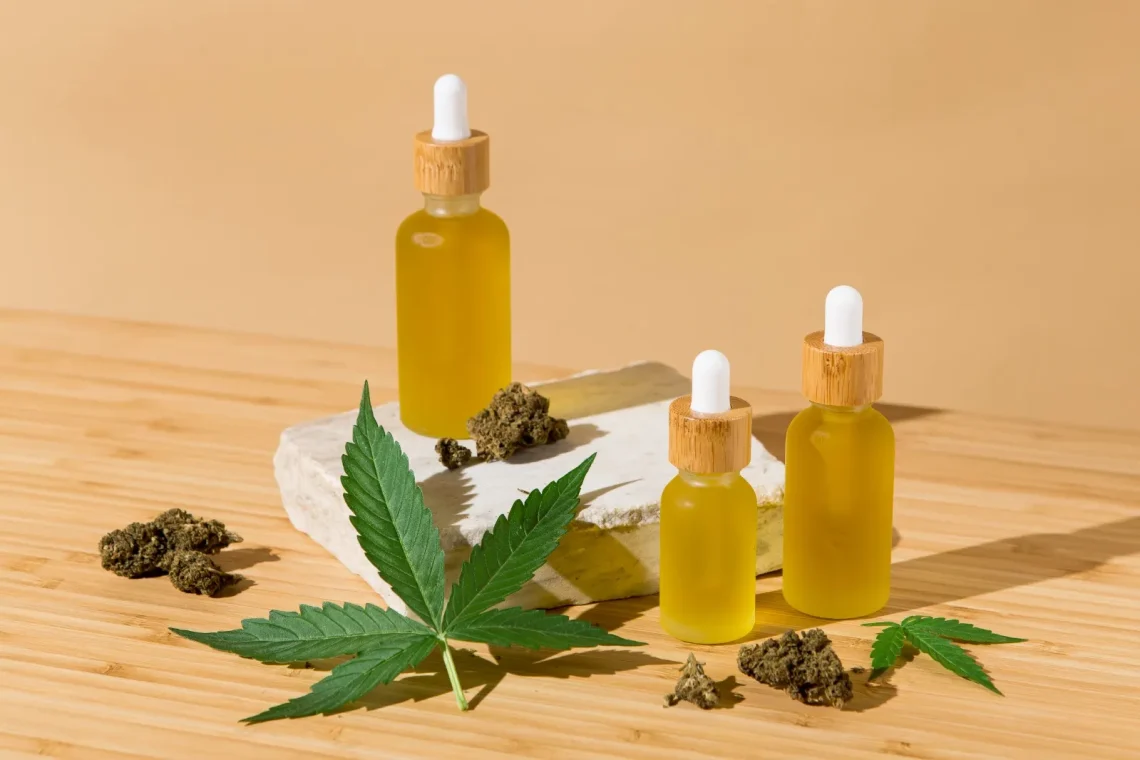
CBD is not illegal in Japan, as long as it has no THC, and the cannabis plant itself is not a psychoactive substance, but a stalk and seed. A product containing any trace of THC would be illegal according to the Cannabis Control Act of Japan. Japan is not governed by the hemp or food law (as many other Western nations are) but has strict narcotics regulation of CBD. Consequently, it means that CBD is legal on paper but strictly limited in practice.
This paper will discuss Japanese legislation regarding CBD legality, what is permitted, what is not allowed, and how enforcement will be carried out in the real world.
Key Takeaways
In Japan, CBD can only be legal when it does not contain any THC.
- Japan adheres to a no-tolerance THC policy.
- Only stalks and seeds should be used in the production of CBD.
- There is no clear regulation of CBD foods and supplements.
- There is strict documentation and inspection of imports.
Japan’s Legal Framework for CBD
The Cannabis Control Act
The Cannabis Control Act of 1948 is one of the most rigid laws against cannabis in the world, which is used to regulate cannabis in Japan.
The law prohibits:
- Cannabis leaves or flowers.
- Psychoactive cannabis growth and trading.
Any material from the illegal parts of plants. CBD legality is not mentioned by name in the Act. Rather, legality is all about plant parts and the presence of THC.
Why CBD Is Not Automatically Illegal
In Japan, CBD is not a controlled substance. This difference enables CBD to be legal under specific and very rigid terms. The Ministry of Health, Labour and Welfare (MHLW) has made it clear that the CBD products should be allowed when they are extracted in:
- Mature stalks
- Seeds
All extracts that are obtained from leaves or flowers are illicit, irrespective of the level of THC.
Japan’s Zero THC Rule Explained
What Zero THC Means in Practice
Though CBD is legal in the EU or CBD is legal in USA, there is a measurable amount of THC; in Japan, there is none. The accepted limit is 0.00 percent.
This means:
- No trace THC
- No tolerance margin
- No exception below threshold.
Japanese customs are very sensitive to the manner in which their laboratories are detected.
Enforcement Reality
CBDs with even microscopic amounts of THC in them are considered illicit cannabis derivatives.
Importers and consumers may experience:
- Product seizure
- Criminal investigation
- Arrest in severe cases
Japanese law does not differentiate between accidental contamination and intentional inclusion.
CBD Products Allowed in Japan
Permitted Product Types
Legal may be as follows, in case it is done compliantly:
- CBD isolate oils
- Topical cosmetics
- Vape liquids without THC
- No ingestion claims on capsules and tinctures.
Nevertheless, legality is not based on the category of products but on compositions, documentation, and testing.
Products Commonly Restricted or Rejected
- Full-spectrum CBD
- Broad-spectrum CBD
- CBD flower
- flavored foods of questionable origin.
The failure to meet compliance has been common with these products, either in the form of plant part origin or THC traces.
Importing CBD into Japan
Import Approval Requirements
Japanese authorities must have a prior review of the imports of CBD.
Importers must submit:
- Certificate of Analysis
- Announcement of the origin of plant parts.
- Elaboration of manufacturing processes.
- THC-free laboratory reports
Products are regularly inspected at the customs without permission.
Role of the Ministry of Health, Labour and Welfare
MHLW conducts an evaluation of imports of CBD on a case-by-case basis. The approval is limited to a product that is reviewed, not the subsequent shipments. CBD does not have a blanket import license.
CBD as Food or Supplement in Japan
Regulatory Gap
CBD foods and supplements are not regulated under a specific category in Japan.
CBD is neither approved as
- A food additive
- A functional food
- A pharmaceutical ingredient.
Consequently, the ingestibles that contain CBD are in a regulatory grey zone, which is allowed but not officially approved.
Advertising and Claims
Claims related to health or wellness are not allowed unless they are accepted under the Japanese pharmaceutical law—products advertised using language that is therapeutic face the danger of being reclassified as illegal drugs.
Expert Commentary on Japanese CBD Law
According to a pharmaceutical law expert, Dr. Junichi Yamamoto, the explanation is as follows:
The law of cannabis in Japan is regulated based on the structure of plants and not on the chemical effect, which is why the regulation of CBD is especially strict.
Journal: Japanese Journal of Regulatory Science.
According to the Japan Cannabis Industry Association, it says:
The most significant consideration in the legality of CBD in Japan is the legality of 0-THC compliance.
There is a note by the MHLW regulation:
Any trace of THC is an infraction, whether intended or not.
Reference: Official notice of MHLW.
Common Misunderstandings About CBD in Japan
In CBD in Europe, cannabis is legalised, but not so in the United States.
- The growing of hemp is not widely allowed.
- Zero is not a relative concept but rather an absolute one.
- The foreign legality is not applicable in the home countries.
Most of the legal problems that come up are due to the misunderstanding of such points.
Practical Compliance Summary
| Requirement | Japan’s Position |
| THC tolerance | 0.00% |
| Allowed plant | Stalks and seeds only |
| CBD isolate | Permitted if compliant |
| Full-spectrum CBD | Prohibited |
| Medical CBD | Not approved |
Is Medical CBD Legal in Japan?
Japan does not have any approved cannabinol-based medicines that are akin to Epidyolex. The drugs produced by cannabis are all illegal under the existing law. Special government authorisation is needed for the use of research.
Comparison With Western Jurisdictions
Japan is very different from the EU and the US:
- The EU regulates the use of THC limits.
- The US regulates through the definition of hemp.
- Japan controls the anatomy of the plant.
Conclusion
In Japan, CBD can be legalised under very strict conditions. The legal environment is characterised by zero THC, limited sources of plants, and strict import controls. Although there are CBD products on the market, their legality is determined by compliance rather than availability. For the consumer, this means care and due diligence. In the case of businesses, documentation, testing, and regulatory tolerances are required. Theoretically, Japan allows CBD, but in practice, it strictly controls it. It is logical to know about compliance before purchase or import, rather than expecting legality as per international standards.
Frequently Asked Questions
Is CBD completely legal in Japan?
Only if it contains zero THC and meets strict sourcing regulations.
Can tourists bring CBD into Japan?
Generally not. Most CBD products are confiscated at customs.
Is CBD oil sold legally in Japan?
Some products are sold, but legality depends on compliance, not retail presence.
Does Japan allow hemp cultivation for CBD?
No, hemp cultivation is strictly controlled and rare.
Will Japan relax CBD laws in the future?
There is no fixed deadline for improvement.

